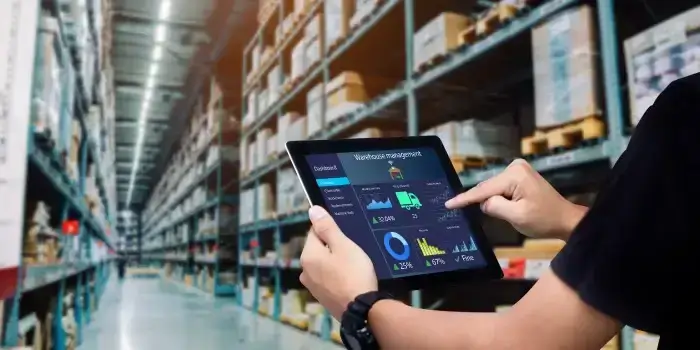
Figure 1: Predictive Analytics
Predictive analytics is the utilization of information, factual calculations, and machine learning methods to determine the probability of future results in light of historical information. The objective is to go past recognizing what has happened to give the best appraisal of what will occur later on. Predictive analytics is utilized as a part of numerous divisions for future expectations with the help of machine learning and artificial intelligence.
Modern retail predictive analytics is also shaped by better feature engineering, stronger data pipelines, and more reliable model deployment practices. This makes it easier for retailers to turn data into actionable decisions at scale.
Customer Behavior Analysis Challenges and Business Dynamics
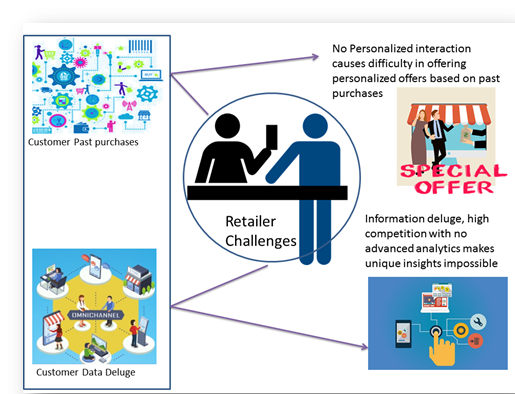
Figure 2: Customer Behavior analysis challenges
For many years retail industry has used past years' experiences to come up with new offers and schemes. The straightforward demonstration of taking a gander at a client's past buys and afterward showing offers in view of these bits of knowledge makes a shopping experience that quickly feels more individual. For quite a while, customized communication amongst retailers and clients appeared to be, to a great degree, hard to accomplish and wasteful for anybody beyond luxury retailers who could bear to commit the time, effort, and assets required. Retailers today deliver more information than ever before. However, their enormous pools don't generally convert into fruitful results. Since there is so much data and in light of the fact that competition keeps on expanding, retailers are increasingly unable to convert data into interesting insights that give them an edge in attracting future customers.
Today, predictive analytics in retail industry use cases often go beyond simple purchase history analysis and include contextual signals such as seasonality, location, weather, and customer engagement patterns. This gives retailers a richer view of demand and buying intent.
Big Data and Predictive Analytics
With the introduction of big data, it has become easy for such retailer to handle such large amounts of data and use it for their benefit. With the help of predictive analytics, they can take proactive action based on real-time data and predict future trends. After analysis, they come up with new strategies and offers to attract more business. It not only helps them identify the most popular products but also helps in determining the popular products or combinations preferred by the customers. Even for smaller retailers, combining these insights with predictive analytics can reveal new potential sales, display emerging trends, or even give an idea of new products prospective customers may want.
Retail teams increasingly use AI predictive analytics for retail to improve decision-making across digital and physical channels. These models can support everything from pricing to assortment planning by learning from historical and real-time data.
Data-driven retailer benefits from using predictive analytics
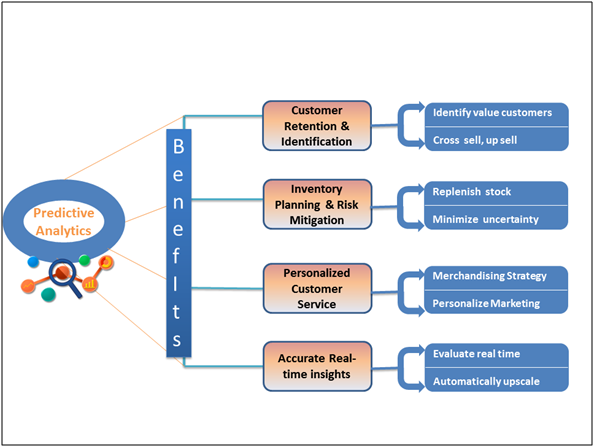
Figure 3: Predictive Analytics Benefits
Customer identification and retention
With the help of analysis, it is possible to identify valued customers and retain them, as well as identify potential customers and attract them with valued offers.
Inventory planning and risk mitigation
Predictive Analytics leverages big data and empowers retailers to design their stock, replenishment, and promotion methodologies in addition to minimizing risk and uncertainty. It is not only important to predict the pattern on a large scale but also to look at the minute details.
Personalized customer service
With a tremendous amount of information, it's easy to start assessing consumers on a more granular level. Rather than making a huge campaign that costs thousands and has a restricted effect or achievement, predictive analysis can customize the showcasing procedure.
Accurate insights in real-time
Big data provides oversight and not only gives a bigger picture, but it also gives insight into an individual. With predictive analytics, one can take a gander at every person and assess their buys continuously to precisely foresee what they would purchase based on their particular purchasing patterns. What’s more, predictive analytics can do the majority of this naturally and at scale.
A key advantage of predictive analytics for retail is that it helps organizations move from reactive planning to proactive decision-making. That shift improves both operational efficiency and customer experience.
Addressing the key challenges
Predictive analytics can address these four major challenges in a scalable way:
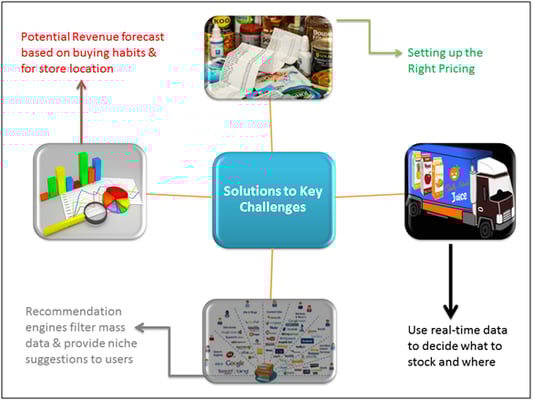
Figure 4: Solutions to Key Challenges
1. Setting up the right pricing>
Setting costs for smaller retailers requires a greater amount of work than science. To date, numerous organizations still construct their costs with respect to notable information and accumulated ideas, for example, regular propensities and patterns. Most retailers still hold up to drop costs until conventional deal periods, missing out on profitable deals. This thus impacts incomes because of the monstrous value fluctuations. Rather, utilizing predictive analytics can help locate the best circumstances to begin diminishing or pushing costs marginally in either direction.
Predictive pricing analytics collate order requests, item valuing history, competitive movement, and stock levels. Also, naturally set ideal costs to react to showcase changes in real time. Utilizing predictive analytics to set costs enables retailers to consider every single conceivable factor continuously, something that would be inconceivable without data science and machine learning. Studies have demonstrated that steady value changes are more powerful than sudden spikes. Artificial Intelligence and predictive analytics can track stock levels and competitor costs and gather requests to figure out what costs should resemble. Being proactive in moving costs can help separate the store and give better control over advancements while remaining a step ahead of the industry.
Retail pricing predictive analytics can also be enhanced by time-series forecasting models such as Prophet, LSTM, and TFT, especially when retailers need to account for seasonality, promotions, and rapid demand changes. In practice, this helps businesses compare demand sensing vs demand forecasting more effectively.
2. Inventory management
Poor inventory management leads to a loss in sales, which in turn paints an inaccurate picture of lower demand for certain items; making future order predictions based on that past data can be harmful. Rather, keen retailers utilize real-time information to move stock where it's required before it's past the point of no return. Furthermore, they utilize predictive analytics to choose what to stock and where in light of information about provincial contrasts in inclinations, climate, and so on. Retail has moved toward becoming as much about envisioning clients' needs as it is about just stocking decent items.
Organizations that adapt to the circumstances and harness analytics can advance their endeavors and earn better outcomes because of proactive procedures rising out of real-time insights. This enables retailers to distribute the correct items to the correct store at the ideal time and keep away from item squandering. Prescient Examination can be connected to numerous different territories in the retail business. It can be an enormous advantage to retailers and empowers associations to design their business from every angle and react rapidly to market changes. Organizations must integrate predictive analytics into both the web and offline channels for a comprehensive view and practice omni-channel techniques.
Demand sensing is especially valuable when retailers need to respond quickly to near-term demand signals, while demand forecasting helps with longer-range planning and replenishment. Combining both approaches gives retailers a more balanced view of stock needs across channels and locations.
3. Recommendation engines
Recommendation engines utilize an assortment of advances and procedures that empower them to channel a lot of information and give a client-centered assemblage of recommendations for the client. Retailers can likewise utilize intelligent search engines to recommend reasonable options if items are out of stock. For instance, a site may coordinate a client towards sports coats if other open-air coats are out of stock.
For instance, obviously, it's not difficult to perceive how web-based businesses can utilize predictive analytics to make particular suggestions for specific clients on what they might like in view of past buys or even their social media (i.e., prescribing items their companions additionally purchased). Predictive algorithms gather and dissect information from different sources, for example, socioeconomics, advertising knowledge, reaction rates, and topography, notwithstanding client data. By figuring out what campaigns would be more fruitful in view of these investigations, marketers can pinpoint the best message/product for a client. Targeted campaigns will lead retailers to achieve higher change rates.
Feature engineering and feature stores also play an important role here, because the quality of recommendation results depends heavily on the signals fed into the model. Strong feature pipelines improve consistency, reuse, and model performance over time.
As client experience is a standout amongst the most critical resources for retailers, predictive search ought to likewise be organized to pick up consumer loyalty and dedication. When we gather information at each and every touch point, smart algorithms empower us to get insights on client buying history, design, inclinations, site hits, interests, and different types of commitment to create a single client view. Predictive analytics includes another value; we can anticipate what the clients' next activities may be and make proposals about significant items based on their behavior. The clients acknowledge pertinent proposals customized to their taste; in this manner, these suggestions will build client commitment and brand loyalty.
4. Smart revenue forecasting
Rather than estimating revenue in view of chronicled information from customers who may not be clients any longer, in the whimsical world of retail, predictive analytics takes into account more exact forecasts in light of the anticipated purchasing propensities for fresh out of the box new clients. Picking a Store location is a standout amongst the most key long-haul choices in the retail business. Predictive analytics can be utilized to gauge the potential income for a chosen store area in view of socioeconomics, property market, targeted marketing, market situations, and customer buying patterns, buying practices, and so forth, before investing. These algorithms can likewise be utilized to break down and deal with the current locations.
Predictive retail analytics is most effective when forecast models are deployed through a repeatable MLOps pipeline that supports monitoring, retraining, and model governance. That helps retailers keep forecasts accurate as market conditions change.
Predictive vs. prescriptive analytics
Predictive analytics tells retailers what is likely to happen next, while prescriptive analytics helps recommend what action to take. That distinction is important because many retail teams need not just forecasts, but also guidance on the best response.
Conclusion
Predictive Analytics is a tremendous aid to the retail business as it encourages them to comprehend and identify with their clients' needs and needs. Retail food merchants can use Predictive Analytics in numerous more zones of their operations, both client-facing and at the back end. Retailers are adjusting analytics to pick up insights into their clients. These insights are being utilized to create a new type of retail: one that is effective, shrewd, and helpful towards empowering brand dependability and better client experience.
About the Author
Garima Jain is a Technical Consultant at Mastech. She has been part of successful teams that shaped the Big Data landscape for our prestigious clients.
Related Webinar