



Let’s be honest: in a crowded market, how a brand makes you feel matters just as much as what they sell. Today, customer loyalty is largely an illusion, and the stakes for businesses have never been higher. According to PwC's 2025 Customer Experience Survey, 52% of consumers have completely walked away from a brand due to a bad product or service experience, while nearly a third (29%) have left over a poor online or in-person interaction. This reality marks a massive turning point: a flawless, end-to-end experience has officially eclipsed price and product as the ultimate brand differentiator.
It's not merely about attracting customers to your brand; instead, it's about fostering meaningful connections, delivering personalized experiences, and nurturing lasting relationships. This paradigm shift underscores the indispensability of a customer-centric approach, where businesses must integrate their sales and marketing efforts to drive engagement and loyalty.
A truly integrated customer experience also depends on shared customer data, aligned journeys, and consistent messaging across sales, marketing, and service. This makes customer engagement feel more connected and relevant at every touchpoint.
This blog delves into how integrating sales and marketing strategies can significantly boost customer engagement, exploring key tactics and metrics to help businesses cultivate meaningful connections across the customer journey.
Understanding the essence of customer engagement
At its core, customer engagement transcends mere transactions; it embodies a holistic approach toward nurturing interactions with your audience. It involves comprehending their needs, preferences, and behaviors to tailor experiences that resonate on a profound level.
In practice, integrated customer engagement works best when every team understands the full customer lifecycle rather than just its own stage of the journey. That broader view helps teams respond more consistently and with greater context.
The power of an integrated customer engagement strategy
A strong customer engagement strategy is paramount in building lasting relationships with shoppers at every touchpoint. It encompasses interaction methods, communication tone, satisfaction cultivation techniques, and metrics to evaluate success. Effective strategies involve the entire organization, from sales and marketing teams to product specialists and customer support reps.
The benefits of integrating sales marketing and customer service on one platform become clear when teams can act on the same data, the same customer history, and the same engagement goals. This reduces friction and improves the quality of every interaction.
The integration imperative – sales and marketing synergy
Traditionally, sales and marketing have operated in silos, each with its objectives and metrics. However, in today's interconnected landscape, this fragmented approach is no longer tenable. Integrated sales and marketing functions synergize efforts, ensuring a cohesive customer experience across all touchpoints.
- Breaking down silos: By aligning sales and marketing teams, businesses can eliminate information silos and facilitate seamless knowledge sharing. This enables a more holistic understanding of customer needs and behaviors, empowering both teams to deliver targeted, personalized interactions.
- Harnessing data insights: Data lies at the heart of effective customer engagement. Integrated sales and marketing functions leverage data analytics to glean actionable insights into customer behavior, preferences, and purchasing patterns. By harnessing these insights, businesses can tailor their marketing efforts and sales strategies to meet customer needs better.
- Streamlining communication: Integrated sales and marketing functions foster open communication channels between teams, facilitating real-time collaboration and alignment. This ensures that marketing initiatives are closely aligned with sales objectives, resulting in more effective lead generation and conversion efforts.
In many organizations, sales marketing integration also improves lead quality, handoff clarity, and campaign consistency. When sales and marketing share goals and signals, engagement becomes more relevant and conversion-oriented.
Crafting a winning customer engagement strategy
Think of a customer engagement strategy as the blueprint for building lasting relationships with your audience. While driving traffic to your online store is crucial, true success lies in fostering connections throughout the entire customer journey.
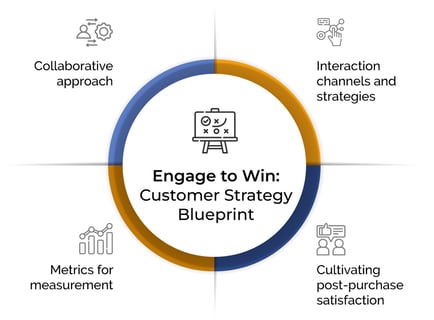
Four key aspects of a comprehensive strategy
- Interaction channels and strategies: Defining the "how, where, and when" of customer interactions. This encompasses the platforms you leverage (social media, email, etc.), the communication tone you adopt, and the frequency of interactions.
- Cultivating post-purchase satisfaction: The journey doesn't end with a sale. Delighting customers post-purchase through loyalty programs, personalized recommendations, and exceptional customer support fosters brand advocacy.
- Metrics for measurement: You can't improve what you don't measure. Defining key performance indicators (KPIs) like customer churn rate, Net Promoter Score (NPS), and engagement rate provides valuable insights into the effectiveness of your efforts.
- Collaborative approach: Customer engagement is a team sport. When every member of your organization - from marketing and sales to product specialists and customer support - embraces the customer-centric approach, the impact is multiplied.
A strong integrated sales strategy should also include customer service, since engagement does not stop at acquisition or conversion. Bringing service into the same operating model helps create a more complete customer experience.
Strategies for integrating sales and marketing
- Thorough utilization of CRM systems: Implementing robust Customer Relationship Management (CRM) systems serves as the linchpin for integrating sales and marketing efforts. A centralized CRM platform enables real-time data sharing, facilitating a comprehensive understanding of customer interactions and preferences across teams. By leveraging CRM functionalities such as lead scoring, opportunity tracking, and automated workflows, businesses can streamline processes and ensure seamless alignment between sales and marketing strategies.
A centralized CRM also becomes the foundation for integrated sales and marketing because it captures customer intent, interactions, and lifecycle activity in one place. That shared view supports smarter segmentation and better follow-up.
- Formation of cross-functional teams: Establishing cross-functional teams comprising members from both sales and marketing departments fosters synergistic collaboration and promotes a shared understanding of overarching business objectives. These interdisciplinary teams work cohesively to develop integrated campaigns, align messaging, and optimize customer touchpoints. By encouraging open communication and knowledge sharing, cross-functional teams drive innovation and enable agile responses to evolving market dynamics.
This approach is especially effective when teams define clear integrated sales workflows for lead routing, qualification, and conversion ownership. Clear process design prevents duplication and helps both teams work faster.
Challenges faced while integrating sales and marketing and their solutions
- Misaligned objectives and metrics: One of the primary challenges in integrating sales and marketing functions is the divergence in objectives and performance metrics. Sales teams may prioritize short-term revenue generation, while marketing focuses on long-term brand building and lead nurturing. To address this challenge, businesses should establish shared KPIs that align with overarching business goals, fostering mutual accountability and incentivizing collaborative efforts towards driving revenue growth and enhancing customer satisfaction.
- Cultural resistance to change: Resistance to change often poses a significant barrier to integration initiatives, particularly in organizations with entrenched departmental hierarchies and cultural norms. To overcome resistance, leadership must champion the integration agenda and communicate the benefits of collaboration across departments. Investing in employee training and development programs that emphasize cross-functional teamwork and collaboration can help foster a culture of innovation and adaptability.
- Technology integration complexities: Integrating disparate sales and marketing technologies can pose technical challenges, leading to data fragmentation and inefficiencies. Adopting a phased approach to technology integration, starting with the synchronization of core systems such as CRM and marketing automation platforms, can mitigate risks and ensure a smooth transition. Additionally, leveraging cloud-based solutions and APIs enables seamless data exchange between systems, facilitating a unified view of customer interactions and enabling personalized engagement at scale.
Measurement can also be a challenge, so organizations should define sales marketing integration measurement frameworks early. Shared KPIs such as pipeline contribution, engagement quality, and conversion velocity help keep teams aligned on outcomes. - Lack of clear communication channels: Poor communication between sales and marketing teams can lead to misunderstandings, duplication of efforts, and missed opportunities. Establishing clear communication channels, such as regular cross-departmental meetings, shared project management tools, and collaborative platforms, fosters transparency and alignment. By facilitating real-time information sharing and feedback loops, businesses can enhance coordination and agility in executing integrated sales and marketing initiatives.
Gauging customer engagement
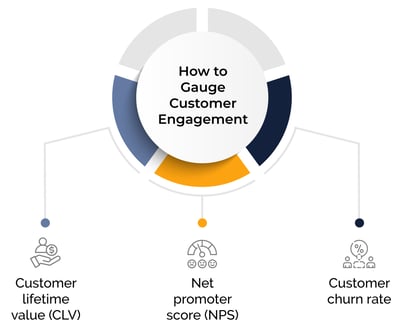
Measuring the efficacy of your customer engagement efforts is paramount to refining and optimizing your strategy. Key metrics to consider include:
- Customer lifetime value (CLV): CLV quantifies the total revenue a customer is expected to generate over their entire relationship with your brand. It provides insights into the long-term profitability of customer relationships.
- Net promoter score (NPS): NPS measures the likelihood of customers recommending your brand to others. It serves as a barometer of customer satisfaction and loyalty.
- Customer churn rate: The churn rate measures the percentage of customers who stop using your products or services over a given period. A high churn rate indicates potential issues with customer retention and satisfaction.
These metrics are most useful when paired with journey-level signals such as response time, content engagement, and conversion path friction. That gives a more complete view of customer engagement sales performance across the funnel.
The rewards of integrated engagement
By breaking down departmental walls and fostering collaboration, businesses unlock a treasure trove of benefits:
- Increased customer loyalty: Engaged customers feel valued and appreciated. This translates into higher customer lifetime value (CLTV) and brand advocacy.
- Improved sales performance: Targeted sales outreach driven by customer insights leads to higher conversion rates and increased revenue. The strongest results often come when companies treat sales, marketing, and service as one system rather than separate functions. That is where integrated sales and marketing delivers the biggest lift in customer trust and revenue growth.
- Enhanced brand reputation: Positive customer experiences translate to positive word-of-mouth marketing, bolstering brand reputation and attracting new customers.
Conclusion
Enhancing customer engagement requires a multifaceted approach that combines integrated sales and marketing strategies with targeted engagement metrics. By understanding customer behavior, personalizing experiences, and breaking down silos, businesses can foster meaningful connections and transform customers into loyal brand advocates.
In short, integrated sales strategies are most effective when they are grounded in shared data, shared goals, and shared accountability across customer-facing teams. That alignment makes it easier to deliver consistent experiences and measure what matters.
If you want to learn more about how our data experts are enhancing customer experience with customer service management (CSM), here’s your chance to watch our on-demand webinar. In this webinar, you will get a first-hand understanding of how we work with customer service organizations that go beyond FAQs and human-assisted customer support interactions by utilizing modern AI-assisted chatbot solutions.
