


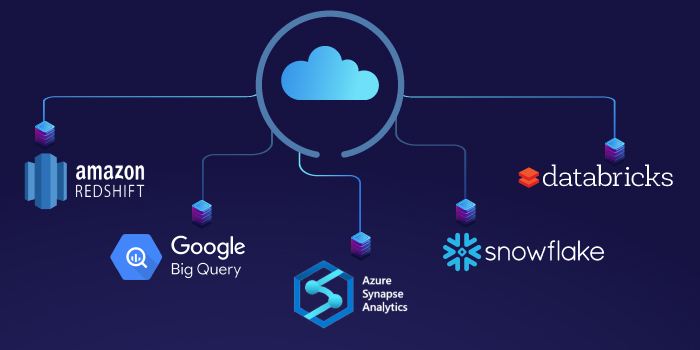
What is a Cloud Data Warehouse?
In our fast-paced, data-driven world, organizations are constantly grappling with the immense challenge of efficiently managing and analyzing vast amounts of valuable data. The limitations of traditional on-premises Data Warehouses have become evident as they need help to keep up with the scale and complexity of modern data requirements.
For instance, imagine a fully managed, scalable, and flexible solution that empowers organizations to store, manage, and unravel the secrets hidden within massive volumes of structured and unstructured data, all in the limitless realm of the Cloud. This is the transformative power of a Cloud Data Warehouse.
Today’s best cloud data warehouse solutions are evaluated not only on scalability and performance, but also on AI-native features, governance, open table format support, and overall total cost of ownership (TCO). A strong cloud data warehouse comparison should also consider zero-copy cloning, time travel, data sharing, marketplace capabilities, and row-level security.
Unlike their on-premises counterparts, these dynamic platforms offer many advantages that will leave you wondering how you ever managed without them. Brace yourself for the awe-inspiring benefits of elastic scalability, pay-as-you-go pricing models, reduced operational complexity, and seamless integration with other Cloud services.
.png?width=795&height=243&name=Cloud-Data-Warehouse%20(2).png)
Benefits of Cloud Data Warehouse
-
Disaster recovery
-
Performance
-
Low cost of ownership
-
Investing in a Data Warehouse
-
Elasticity
-
Unlimited computational power and data storage
-
Scalability
-
Reduced database management
-
Advanced security
-
Improved access and integration
Among the Cloud's most popular Data Warehouse technologies/solutions, four stand out due to their uniqueness in scalability, performance, and Cloud-native architectures:
- Amazon RedShift
- Google BigQuery
- Microsoft Synapse
- Snowflake
- Data Bricks
Let's explore the rich features and differences:
A useful data warehouse comparison goes beyond pricing and speed. It should also evaluate each platform’s support for open formats like Apache Iceberg, AI-assisted analytics, vector search, and granular security controls such as column masking.
1. Amazon RedShift
Amazon Redshift, the formidable Cloud Data Warehouse by Amazon Web Services (AWS), offers unparalleled performance, scalability, and cost-effectiveness. Powered by columnar storage and parallel query execution, it effortlessly handles massive analytical workloads. Seamlessly integrating with various AWS services, such as S3, Lambda, and IAM, Redshift creates a harmonious data integration and processing ecosystem. With flexible deployment options and compatibility with SQL-based tools and business intelligence apps, Redshift ensures swift query performance, regardless of data size. Users can launch their Redshift cluster, upload data, and easily unleash data analysis's power.
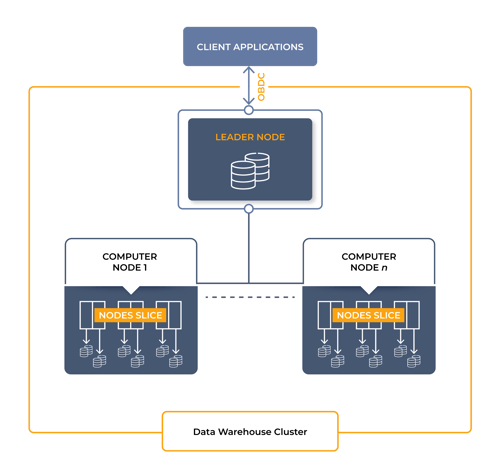
Redshift also supports advanced security and governance features that make it relevant for enterprise use cases, though teams should still evaluate its TCO beyond base pricing, especially when workloads grow in scale and complexity.
2. Google BigQuery
Google BigQuery is a visionary Cloud Data Warehouse that knows no bounds. Its serverless architecture and exceptional scalability make it a true pioneer. BigQuery's distributed framework and columnar storage prowess enable it to conquer colossal datasets and complex queries easily. By decoupling storage and computing, BigQuery allows you to scale your computational resources independently, striking the perfect balance between cost optimization and stellar performance. With advanced machine learning capabilities, seamless integration with Google Cloud services, and rock-solid security features, BigQuery propels your organization into a world of agility and analytical prowess.

BigQuery is also strong for AI-driven analytics through BigQuery ML, and it supports modern lakehouse-oriented workflows through open table format integrations. Its serverless design can simplify operations, but organizations should still assess TCO based on query patterns and storage usage.
3. Azure Synapse
Discover the power of Azure Synapse, the all-encompassing Cloud Data Warehouse that seamlessly integrates big data and traditional warehousing. With its robust analytics platform on Microsoft Azure, Synapse brings harmony to your data ecosystem, partnering with tools like Power BI, Azure Data Lake Storage, and Azure Machine Learning. Bridging the gap between diverse data needs, Synapse emerges as a formidable contender in data analytics. Embrace its enigmatic potential and revolutionize your data strategies with confidence.
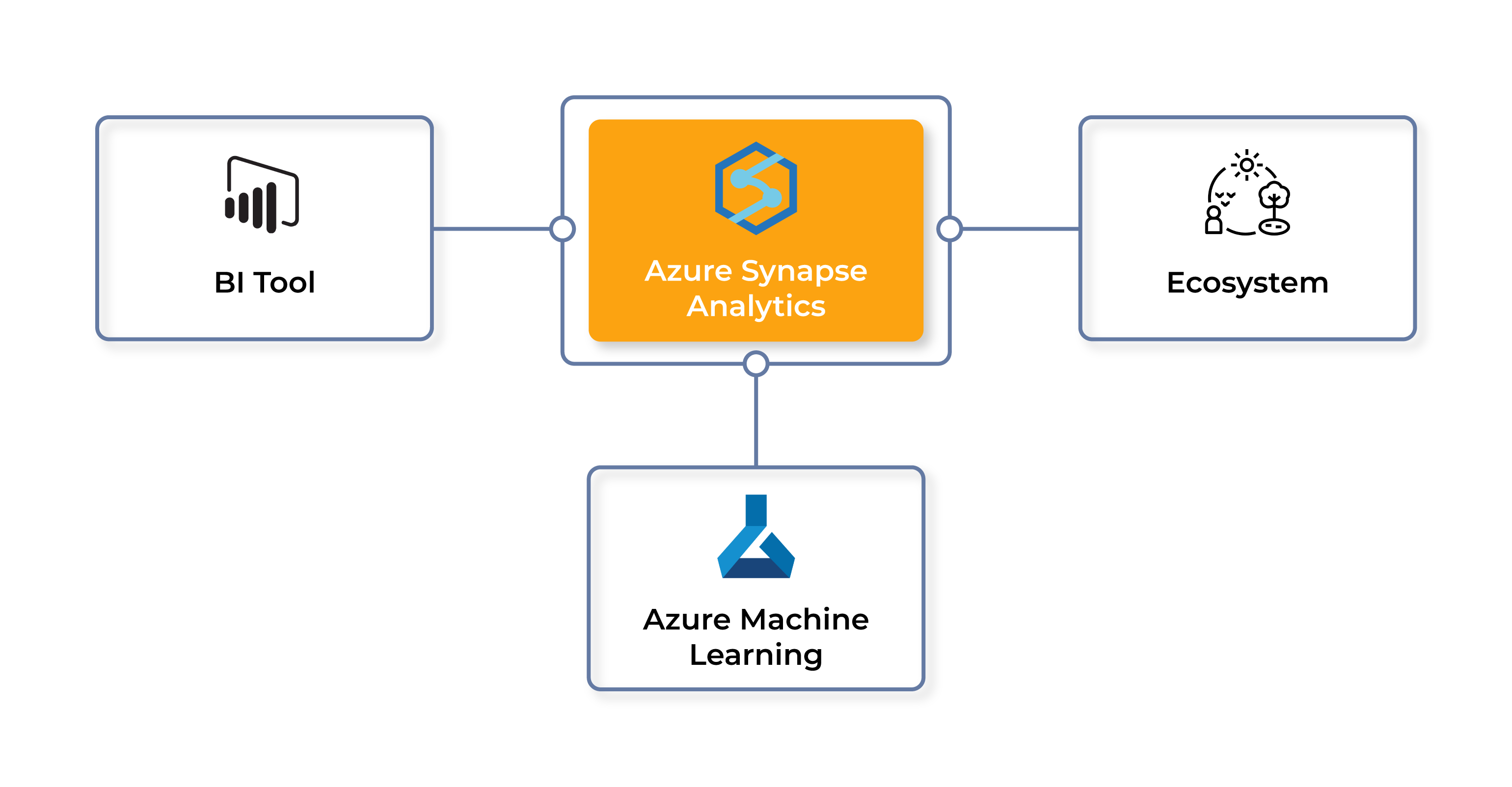
Synapse works well in Microsoft-centric environments and can be paired with governance and security controls across the broader Azure stack. For buyers comparing cloud data warehouses, it is important to assess how Synapse handles scalability, AI features, and workload complexity across analytics scenarios.
4. Snowflake
Snowflake, a Cloud-native, fully managed Data Warehouse platform, embodies simplicity, flexibility, and limitless scalability effortlessly. With its distinct architecture, separating storage and compute layers, you gain unparalleled control to scale resources independently. Snowflake's automatic optimization and scalability elevate your performance and cost efficiency. Supporting diverse data types and fortified by robust security features, Snowflake captivates enterprises and data-intensive organizations, offering a secure haven for your data-driven ambitions.
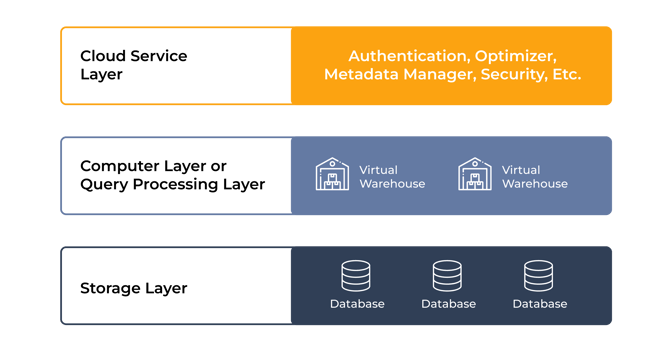
Snowflake stands out for features such as zero-copy cloning, Time Travel, secure data sharing, and marketplace capabilities. It also provides strong row-level security and column masking, making it attractive for organizations that need both flexibility and governed data access.
5. Databricks
A dominant Cloud-based platform that unifies data engineering, data science, and machine learning into a seamless experience, Databricks offers exceptional scalability, making it an optimal choice for businesses dealing with vast datasets. Additionally, Databricks excels in performance, guaranteeing high efficiency even with complicated queries. Its user-friendly interface extends accessibility to non-technical users, fostering ease of use. The platform's integration with various Cloud services facilitates the creation of comprehensive data analytics solutions. Beyond its capabilities as a Cloud warehouse, Databricks offers additional valuable functionalities, such as data lake creation for efficient data storage and access, data engineering for pipeline development and management, data science model building and execution, and machine learning model creation and deployment.
Databricks is especially relevant for teams that want a unified platform for analytics and AI, with support for open table formats and vector search use cases. Its AI-native capabilities make it a strong option where data engineering, machine learning, and modern data warehousing converge.
Conclusion
A diverse landscape unfolds in the realm of major Cloud Data Warehouse vendors—Amazon Redshift, Google BigQuery, Microsoft Synapse, Snowflake, and Databricks. When comparing cloud data warehouses, organizations should look beyond performance and pricing to evaluate AI-native features, open format support, governance, data sharing, and long-term TCO. The best cloud data warehouse depends on whether the priority is serverless simplicity, enterprise governance, AI readiness, or unified analytics and machine learning.
Some of the relevant pros and cons of these platforms can be summarized as follows:
-
Redshift offers performance at scale but can be cost-intensive
-
BigQuery excels in querying speed but lacks ACID transactions
-
Synapse integrates well but can be complex
-
Snowflake combines performance and simplicity, but may incur costs
-
Databricks integrates analytics and AI, but requires skilled resources
The offerings, ranging from shared to dedicated clusters, fit different business needs, with each platform uniquely poised to fuel data-driven innovation.
This article sheds light on Cloud Data Warehouse technologies, preparing organizations to embrace the data revolution and unlock limitless potential. With Mastech Digital offering robust Cloud Data Warehouse solutions, organizations can experience seamless scalability, advanced analytics, and powerful security to drive smarter business decisions.
Related Webinar
